Is Angi Worth It for Contractors? What You Pay For and What to Watch
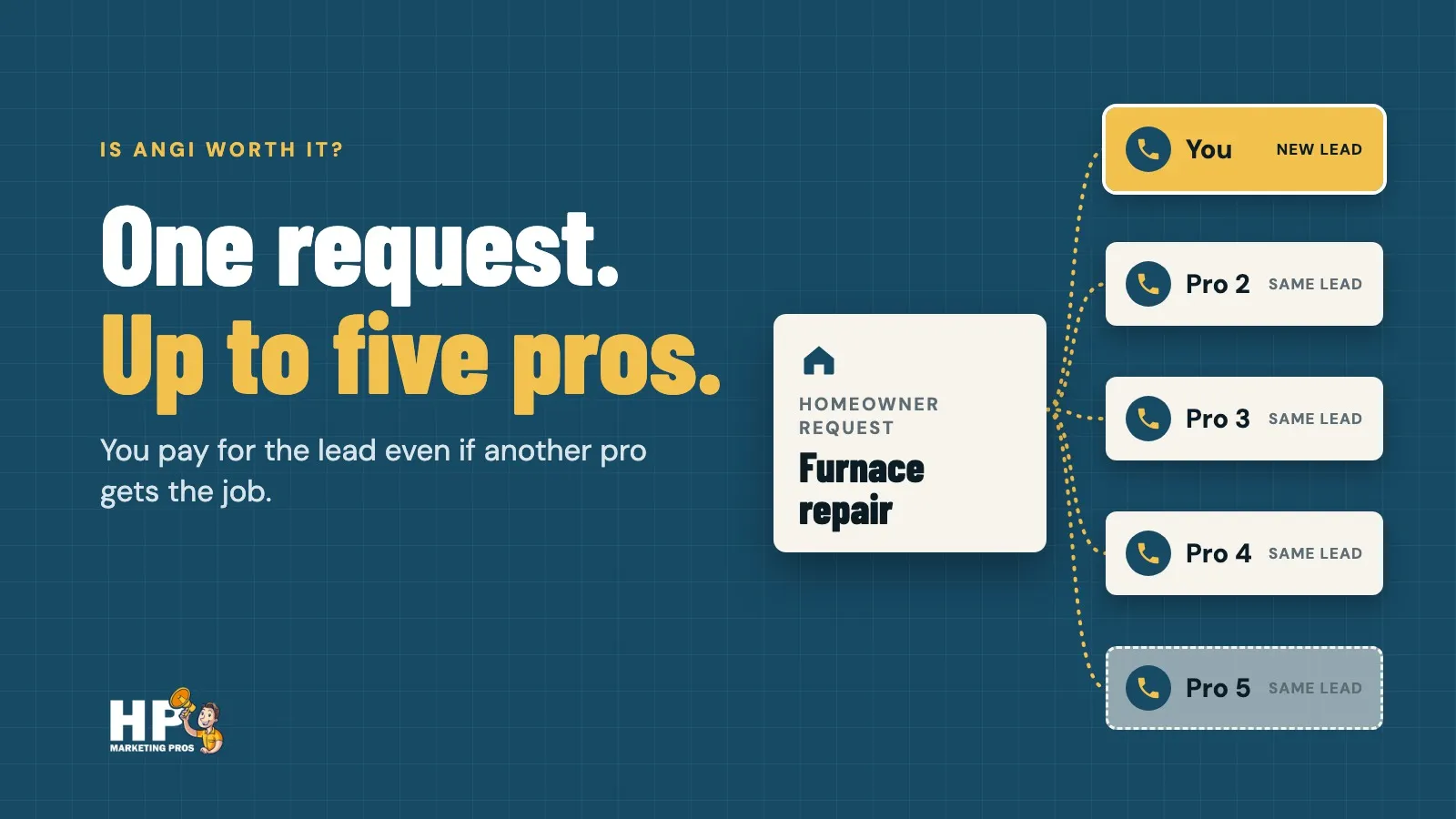
Angi can fill a slow schedule, but you pay for every lead whether you win the job or not, and up to five pros can get the same request. What to check before you sign, and how to test it first.
The slow weeks hit, the schedule has holes in it, and Angi starts to look tempting. It can put homeowners in front of you fast, but you pay for each one whether you get the job or not.
Angi tends to work best for shops that can call back within minutes and have room on the schedule. It's a harder fit for shops that are slow to call back, sell mostly big jobs that take weeks to close, or sign a subscription before testing it.
How Angi Leads Work
A homeowner asks for help on Angi, on HomeAdvisor (one of Angi's brands) or through a partner site or phone call. Angi matches the request with pros who cover that type of job and that area. You pick your service categories, the zip codes you serve and a monthly budget.
Angi says each request goes to no more than five pros. So when a lead lands on your phone, assume a few competitors got it too.
What You Pay For
You pay for each lead you receive, whether or not you win the job. Leads Angi sends you automatically are charged even if you never open them or call the homeowner back.
The price of a lead depends on the type of job, where the homeowner lives and how much demand there is for that work. Angi doesn't post lead prices publicly, and what matters more is what each booked job ends up costing you.
There are a few ways to pay. You can pay per lead against a monthly budget, or sign a subscription, which is a prepaid commitment that gets you a discount on leads. You can also pick individual requests, which Angi calls Opportunities. One only becomes a lead you pay for when both you and the homeowner have shown interest, and it's charged on top of your budget or subscription.
The First Call Usually Wins
With the same request going to several pros, the first one to call has the edge. Angi tells pros that calling a new lead within 15 minutes more than doubles the chance of reaching the homeowner, and that most closed leads go to the first pro who makes contact.
If nobody can call back that fast, you'll end up paying for leads a quicker competitor closes. Set business hours in your Angi account so leads come in when someone can call, and turn on Angi's automated messages for when everyone's tied up on a job. Angi recommends setting them to reply within five minutes of a new lead.
Bad Leads: What You Can Get Credited
Some bad leads can be credited, but the list is short, and Angi decides after it reviews your request. Angi may give you a credit when:
- The phone number is disconnected, out of service or isn't the homeowner's.
- The job is outside the zip codes you set.
- The job is a service you didn't sign up for.
- You were charged twice for the same lead.
- You were charged while your leads were paused.
There are conditions. The lead has to be less than 45 days old, you're expected to have tried calling the homeowner within 24 hours, and your account can't have an overdue balance. A homeowner who never answers or calls back doesn't qualify.
Credits go on your account for future leads. They aren't refunds, and they expire if you don't use them within six months. If you're on an annual subscription, you can report a bad lead, but you won't get a credit for it.
Read the Subscription Before You Sign
A subscription can lower your cost per lead, but it changes the deal. Angi's standard pro agreement says the following, and your signed contract wins wherever the two differ:
- It renews automatically unless you tell Angi before the new term starts.
- Angi can raise the price at renewal, by up to 10 percent over what you paid the term before.
- Leaving early can come with an early termination fee, set in your own contract.
- The number of leads you're told to expect is an estimate, not a promise. Getting fewer doesn't excuse you from paying your fees or the early termination fee.
- If you cancel mid-term, you can use the subscription until the term ends, but you won't get any of that term's fee back. Canceling means a call to Angi's customer care team.
- If you cancel something you got a discount for, Angi can take that discount back and charge you the difference right away.
- If you turn your leads off, you may not get the full monthly value you're paying for.
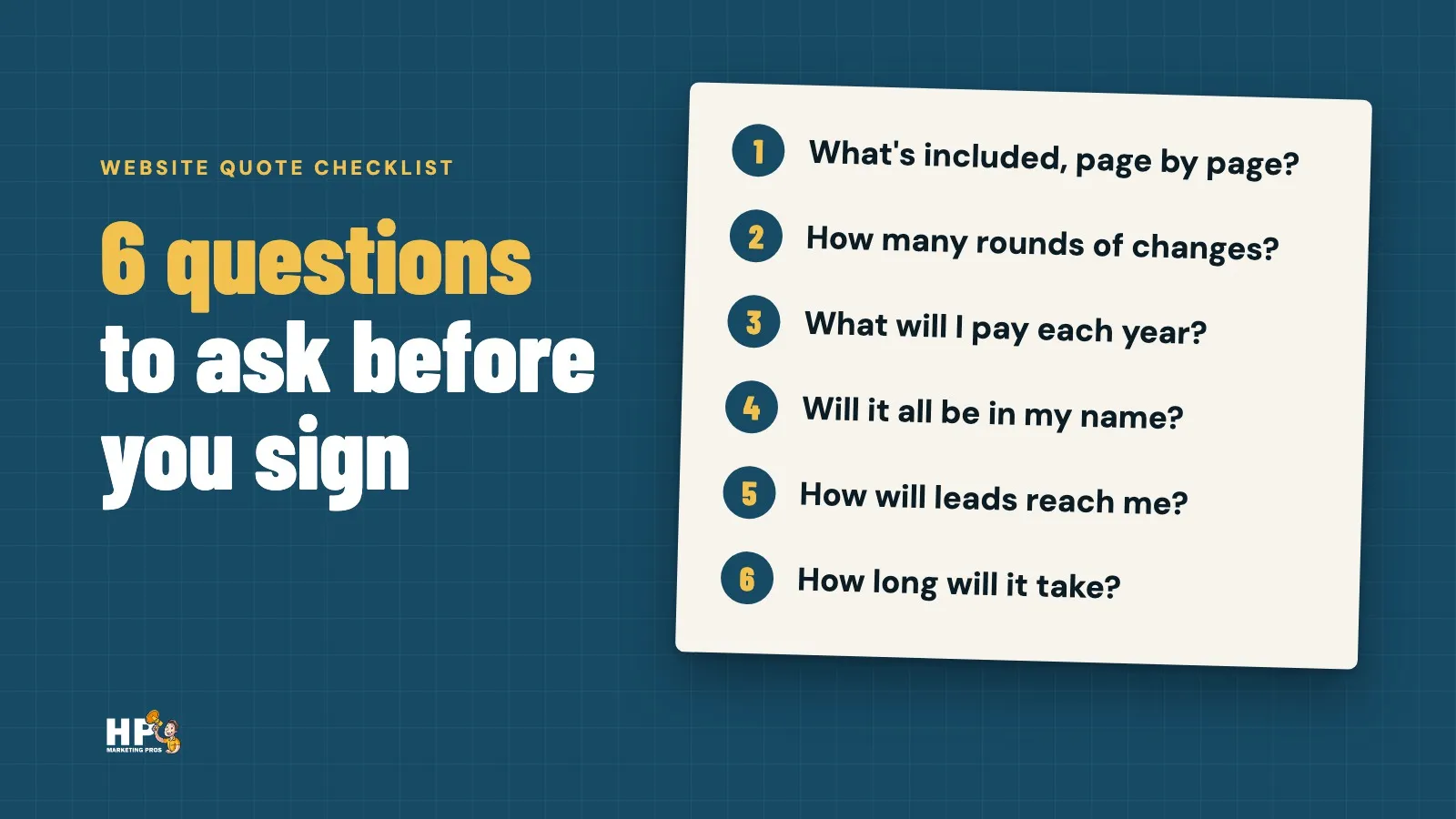
Ask for the term length, the price, any annual membership fee and the early termination fee in writing before you agree to anything.
The FTC Case Against HomeAdvisor
In 2022, the Federal Trade Commission accused HomeAdvisor of misleading service providers about its leads, including telling them homeowners were ready to hire when, the FTC said, many weren't. HomeAdvisor denied the allegations and settled in 2023 without admitting them. The order bars the company from making false or misleading claims about its leads, like falsely saying homeowners are ready to hire, and required it to pay up to $7.2 million to partly reimburse service providers. The order runs for 20 years.
HomeAdvisor, Inc. is still the company named in Angi's pro agreement, so that order still applies to the company you'd be signing with. The order can't tell you whether Angi will pay off for your shop, though. Your own numbers will.
When Angi Makes Sense
Angi is more likely to pay off if:
- You're moving into new towns or adding a service where nobody knows you yet.
- You do repair and service work where homeowners call around and book quickly.
- Someone in your office can call every lead within minutes.
- You have open time on the schedule, like the slow weeks between heating and cooling season.
It's less likely to pay off if:
- Most of your work is large jobs that take weeks of selling.
- Your schedule is already full during your busy season.
- Leads would sit until the end of the day before anyone calls.
Reviews help here too. Angi says pros with three or more reviews are three times as likely to be picked by a homeowner, so ask your first few Angi customers to leave one there.
How to Test Angi Before You Commit
Start with pay per lead and a small budget you're comfortable testing with. Angi's terms say the budget can run over by a lead or two. Keep your categories and zip codes tight, so you aren't paying for work you don't want to do.
Track every lead for two or three months: what it cost, whether you reached the homeowner, and whether it turned into a booked job. Request credits for bad leads as you go. Angi's help center allows 45 days, but the pro agreement says disputes about charges have to be in writing within 30 days, so don't wait. Then divide what you spent by the number of booked jobs. That's your cost per booked job, and it's the number to compare with everything else you pay for.
Only think about a subscription once your cost per booked job works for your margins.
Rented Leads vs. Leads You Own
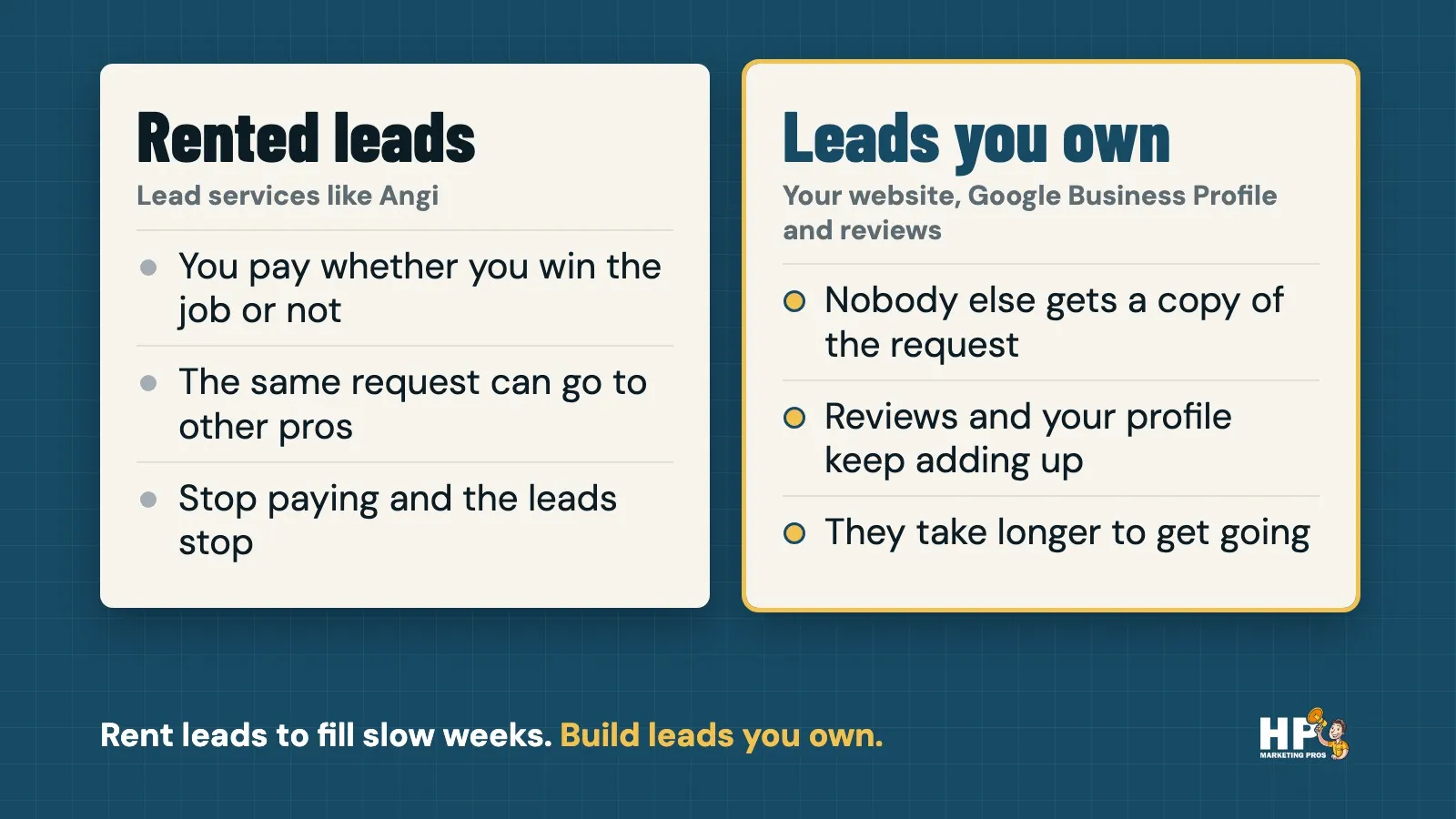
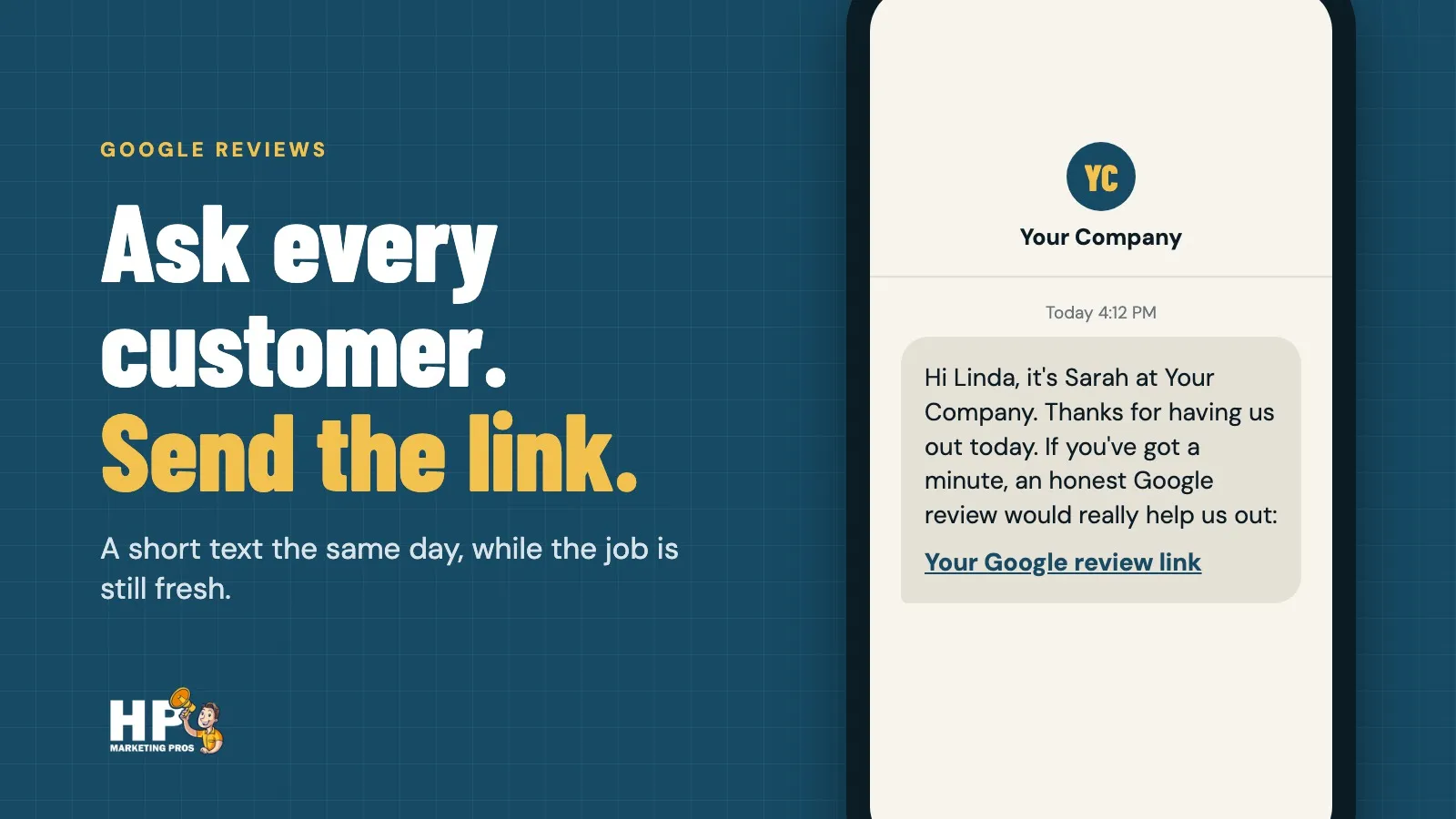
Angi leads are rented. When you stop paying, they stop coming. The customers you win are a different story. Once you've done the job, you're their contractor: put them in your system, ask them for a Google review like any other customer, and offer your maintenance plan if you have one. Just read your Angi contract first: it treats homeowner information as confidential, and it keeps covering customers you met through Angi even after you leave.
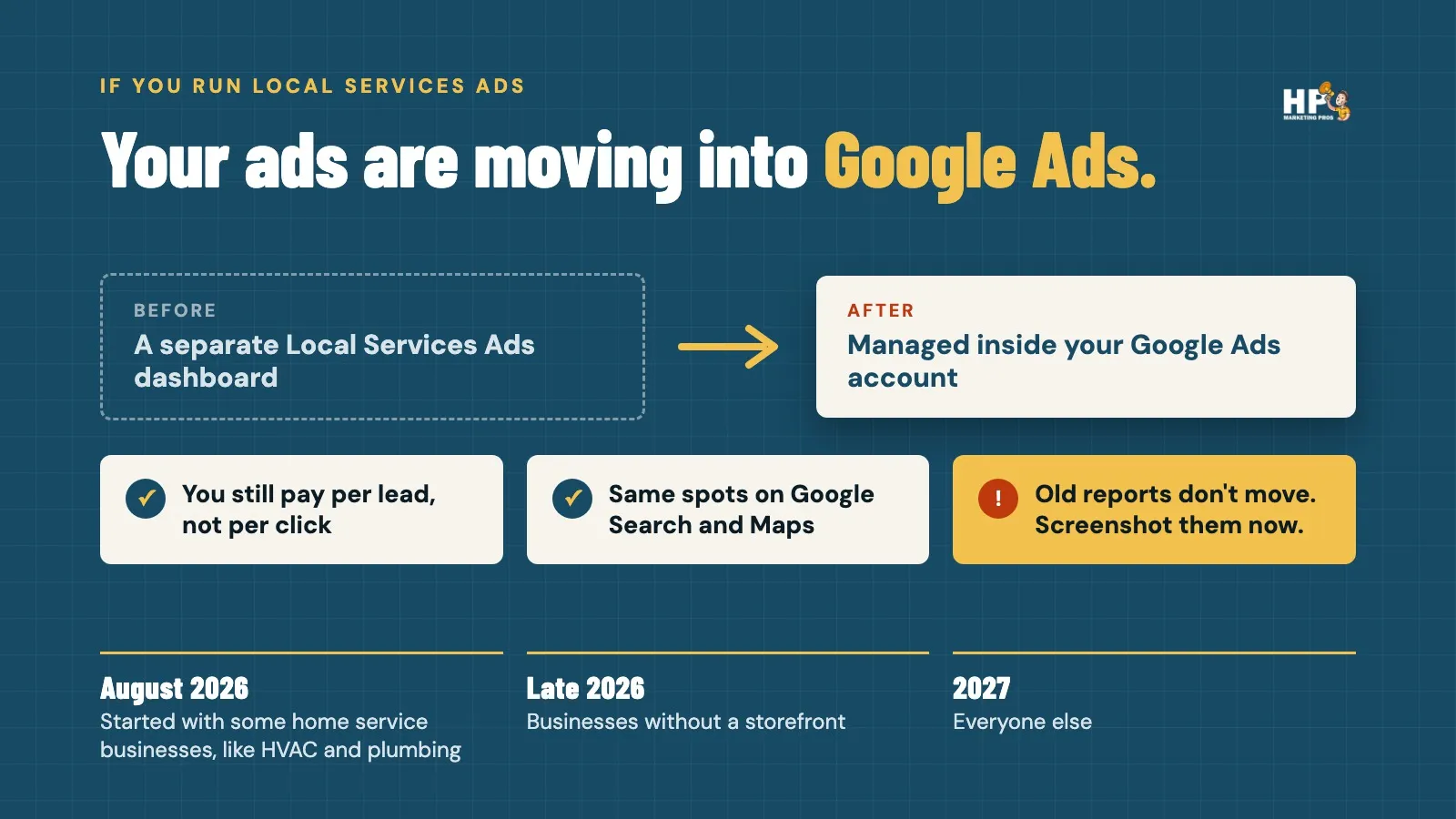
The leads you own come from your website, your Google Business Profile and your reviews. They take longer to build, but nobody else gets a copy of the request. Our post on getting more Google reviews is a good place to start. Google Local Services Ads are another paid option, where the homeowner picks your business and contacts you directly, but they stop when you stop paying too.
Using Angi to fill slow weeks is a reasonable plan, as long as it doesn't become the main way your phone rings.
Frequently Asked Questions
Can I pause Angi leads?
Yes. You can pause your leads for up to two weeks, or set business hours so leads only come when you can answer. If you're on a subscription, pausing doesn't pause the contract, so you may get fewer leads that month while the contract keeps running.
Can Angi charge me more than my monthly budget?
Yes. A pay-per-lead budget can be exceeded by a lead or two, and any Opportunities you accept are charged on top of it.
Can I get money back for a bad Angi lead?
Not through Angi's credit process. Some bad leads can be credited, but credits only go toward future leads and expire after six months. Annual subscribers can't get lead credits.
Is HomeAdvisor the same as Angi?
HomeAdvisor is one of Angi's brands. Leads from HomeAdvisor and Angi both go to pros through the same Angi for Pros system.
Get a Second Opinion Before You Sign
If you're weighing Angi against Google Ads, Local Services Ads or your own website, we'll look at your trade and your towns and tell you where we'd put the money first. Sometimes the answer is to keep Angi running. Get a free growth plan.

HP Marketing Pros
Practical marketing guidance from a team with decades of experience in and around trades businesses.
Need a hand with this?
Want us to handle this stuff for you?
Stop worrying about marketing and focus on what you do best: running your business.
Let's Talk